Play Day in Field Springs Park

Early start to a productive day with a shorter-than-planned run in Field Springs State Park in Anatone, Washington. I had been hoping to do the loop around the perimeter of Field Strings which will take you through some nicely wooded areas witField Springs 6-9-13 001ah very small rolling hills, and then out to the edge of Puffer Butte, overlooking the Idaho side of the Snake River and Waha Mountain. The shorter-than-planned part happened when I reached a cattle gate and saw the "Closed -Hunting" sign leaning on the hinge side of the gate. Apparently it is turkey season - something I should probably know since I think this is the third year in a row I've managed to have a run curtailed. And, no, gate crashing is not recommended. The other folks are armed and, hopefully, careful. Hope isn't a plan; staying out of their way and letting them enjoy the area is A-Okay.

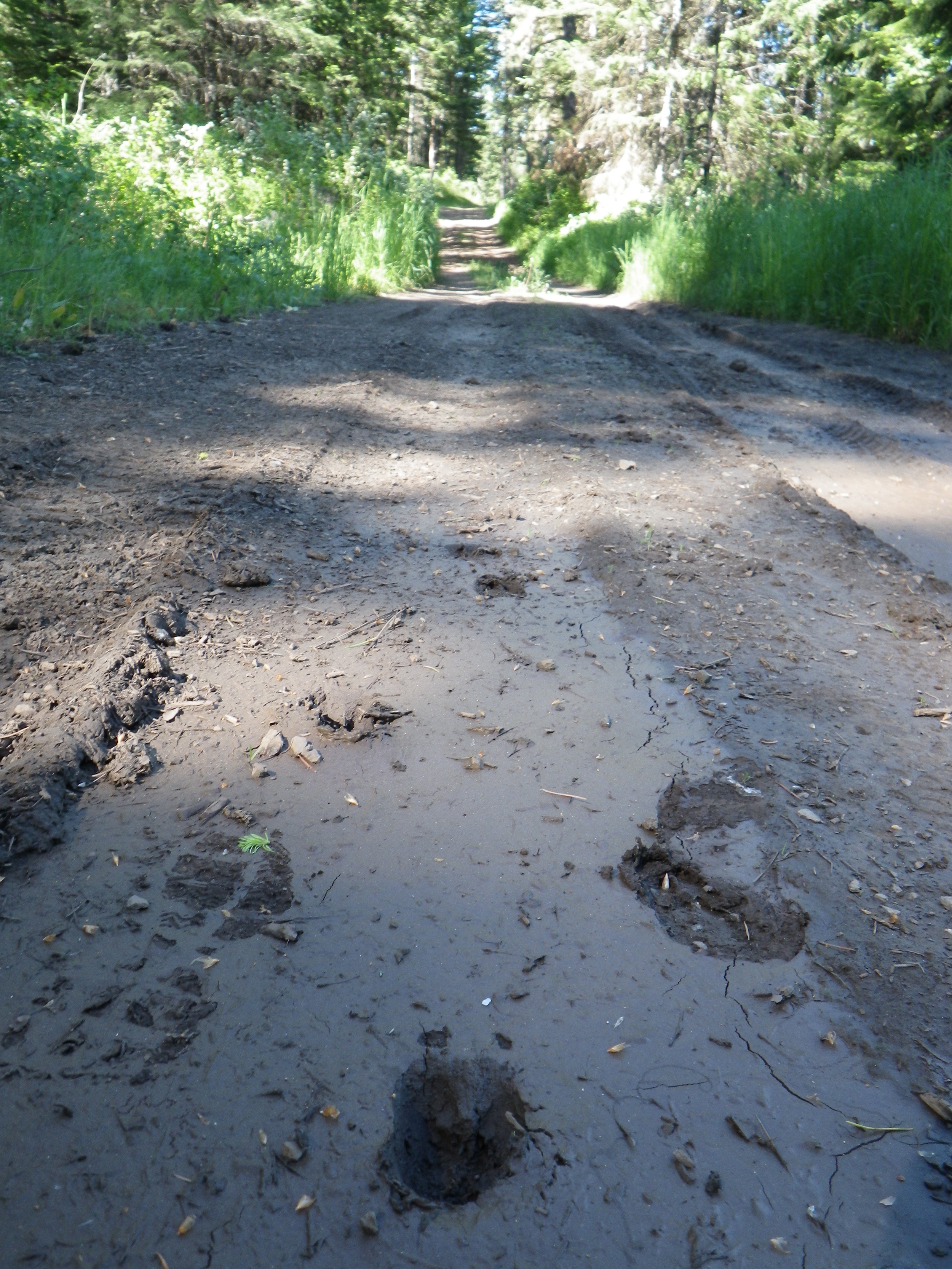
So I played on the trails available. Wildlife was a little scarce though some deer had Foot and Hoof Prints in Field Springsobviously been through some time recently. Turkeys were nowhere to be seen and no signs of bears. This was the same trail that I was running with my daughter, Sara, and a friend when a bear came bouncing out of the woods and stopped staring at us in complete surprise. It was one of those quite mutual things and after the little guy took off, we kept worrying about mama bear.

After finishing, I broke out the laptop and got some writing in on the novel - I swear it will eventually get done! - and snacked on strawberries and cherries from the garden. The blueberries were store bought as I'm can't seen to get mine to produce worth a dang. Field Springs 6-9-13 005Throw in a little chicken from the grill and it was a nice way to wrap up the run.

The best part is that I had the trails to myself (the open ones, of course.) Field Springs is only 30 minutes from the Lewiston and Clarkson but no one bothers to make the trip up except the cross country team a couple of times in the summer.

That's okay - I'm happy to hog it for myself.

A Walk with Rose, Installment II

I'm going to post installments of a little novella, A Walk with Rose, that I'm working on. Every couple of days, I'll put up a new piece of the first act. Act II is started but on hold until I get done with my novel. Once I finish that, I'll be finishing this novella and put it up on Amazon as a Kindle book.

I will be donating 25 percent of the proceeds from publication to the local Humane Society. If you want to purchase a copy of the whole work then, send me an email at thatguy at paulduffau.com and I'll put you on the list.

A Walk with Rose

 Everybody makes mistakes. On January 13th, Laura Fitzpatrick made two. The first, made at 2:47 PM, was forgetting her purse. She remembered before she left the driveway and rushed back into the house, leaving the driveway one minute late. She made second mistake after picking up her daughter from elementary school. At the only stoplight on the street, she braked to a hard stop in the left hand turn lane when the light turned yellow, a light that she could have made it safely. Eighteen seconds later, at 3:18 PM, an elderly man driving north blacked out, swerved and, his car accelerating under his convulsing foot, smashed into the front passenger side of her car. Laura was uninjured.

Her daughter was not; her right foot was mangled by the crushing steel of the oncoming vehicle. Paramedics arrived swiftly, gasped, and started feverishly working to save the girl’s right foot. She was loaded into the ambulance and rushed to the hospital. Left at the scene of the accident was one small pink shoe, blood-soaked.

********

On January 13th, Mrs. Joy Williams passed. Roy, husband of 52 years sat on one side, holding her hand, not crying because she had asked him not too. On the other side, resting her head on the bed sheets was Joy’s dog, Rose, friend and helper as she met this last stage of life.

Her son, James and daughters, Anne and Marie, waited in the living room, sitting on the dated couch and love seat, eyeing the knickknacks that lined shelves, recognizing gifts given in childhood, the wall of pictures, faded blacks and whites in old-fashioned frames, color pictures of the kids as they grew, marriage photos, and grandchildren’s school pictures. Joy always brought visitors to the wall.

A gentle squeeze on Roy’s hand, a single finger lifting on the other hand to give Rose one last scratch under the chin, she passed, quietly.

********

“That’s an awfully brave girl you have.” said Shelly above the racket from the kennels. The dogs, seeing people and wanting out, barked and whined. Somewhere in the back, a hound howled, the deep “Ahhhhwoooooo” echoing through the building. They watched as Ellie, brown hair pulled back in pigtails, leaned on her crutch as she made her way down the aisle between the dog kennels.

“Yes, she is.” replied Laura.

Her voice was soft and Shelly had to strain to hear her. Months ago, Shelly’s statement would have led to tears but Laura had no more. Eleven year olds should not have to be brave. Four surgeries in six months had exhausted her and Galen as they watched their little girl, tiny in the hospital bed, go through each procedure. The doctors had explained, choosing their words with care, that they, the doctors, could do no more for Ellie. They asked if the family prayed.

“She doesn’t cry anymore.”

Shelly looked at her sympathetically while watching Ellie. The young girl stopped at each kennel, peering through the chain links of the gate.

“You took the survey?” she asked Laura.

“The one they gave us up front?” replied Laura. “I let Ellie fill it out. It’s going to be her dog.”

“Is Ellie going to be the one taking care of the dog?” probed Shelly. Too often, the shelter had gotten dogs returned because the parents discovered that the kids didn’t follow through with the work of caring for a pet and the parents were already overwhelmed with careers and children.

“She says she will. If not, I’ll help.” Laura smiled at Shelly. “But thank you for the warning.”

Shelly nodded. Ellie might be different, she thought, but it never hurts to bring it up.

Ellie reached the end of the kennels and started back to her mother in a rocking hobble across the concrete, swinging her right leg but unable to support any weight on it.

She looked up when she reached the adults.

“So which one do you want?” asked her mother.

Ellie paused, brown eyes looking up to Laura. She shook her head.

“My dog isn’t here yet.” And she turned to leave.

5 Things You Gotta Avoid in a Running Stroller

5 Things You Gotta Avoid in a Running Stroller

If you are both a runner and a new mom (or dad), one of the first items on the baby list after the 1121 page illustrated "How to Raise Your Child" manual that comes with every kid - they wouldn't give us little humans without manuals now, would they? - is a running stroller.

Woman with StrollerSince you're not alone - it only feels that way when the baby cries incessantly at 3AM and the hubby manages to sleep through it (we're faking, you know that, right?) - all the stroller companies, sporting goods stores, Macy's, and the QuickMart on the corner have advice on how to pick that stroller.

They're all wrong.

1. Small Tire versus Large Tires

Almost every person offering you advice is going to suggest you need a three wheeled stroller with larger tires. Larger tires reduce the amount of effort to move the stroller. Since you are running for your health and not your sanity, smaller tires that make it much harder to push the stroller are the way to go.

You only have about seven free seconds to get in your run, sandwiched between changing a diaper and dishes and even that can disappear with a single "Honey, could you get me a beer?" You need to maximize your workout. That means small tires.

While we're on the topic of tires, go with the hard inflexible ones for your running stroller. They transmit shock better and will add a full body vibratory massage for the baby.

2. Weather Protection

Don't need it and it costs extra. If you add weather protection to the stroller, it adds to the weight which is good but you end up denying your child the miracles of rain, sleet and clammy freezing fog. You're running in this stuff - they should get to enjoy it too.

3. Steer-ability

If you have friends that run, the first thing they'll rave about their new stroller is how easy it is to steer. They have completely missed the point.

You do not want a stroller that is easy to steer for two reasons. The first harkens back to Point 1 above. This is a workout so maximize it. An easy to steer stroller will not give you a proper workout for the hands and forearms so you want to avoid the kind that have front wheels that pivot.

Without this kind of workout, your arms will grow unbalanced as, if you haven't already discovered, carrying a baby will give you some serious biceps and, depending on the man of the house, the biggest guns in the home.

The second reason is the right of privilege. Your a mom, running. You have right-of-way under almost all conditions (by habit, I yield right-of-way to rattlesnakes ahead of running moms) which means it is perfectly acceptable to run over the laggards in front of you.

4. Storage Capacity

Most running strollers boast about their ability to store the car keys, wallets, binkies, blankies and bottles, sun screen, toys, snacks for you and baby, and a smallish Chihuahua.

This isn't the Lewis and Clark expedition. It's a run - how much of this stuff do you really need?

5. Durability

Face it. That cute little bundle of joy is going to rapidly gain weight. Great for the workout until you feel like you're pushing the Titanic. At some point, they need to stand on their own two feet and run for them selves. Buying a stroller built to last for twenty years (you're not considering having infants for the next twenty years, are you?) might be overkill.

And don't worry about the little one running on their own - they already have the instinct to run. All the ancestors who said "Huh?" when the lookout shouted "Lion!" have been removed from the gene pool.

So there you have it. 5 Things You Gotta Avoid in a Running Stroller - from my perspective.

Of course, if you disagree, feel free to get an easy to steer, light-weight, durable three-wheeled thingie.

Just don't blame me when it takes an hour of pleasant running to get your workout in.

Running Times Magazine for a Buck

I just set up a new subscription for Running Times - probably the best race-oriented running magazine on the planet - and was slightly stunned at the cost. A buck an issue.

I'm no economist and the business I run is smaller and serviced based but I can't figure out how they're going to make any money like that unless the ad revenue is just out of sight.

I knew Sidney Harman purchased Newsweek - the whole operation, not just a copy - for a buck and probably over-paid but Running Times is a quality publication. It's apples and lemons.

The top article that caught my eye? History, in the form of a 17 year old girl, breaking a 31 year old record in the 800 meters.  Mary Cain dueled the National Champion to the finish line.

"That last 100 I saw Alysia there and I said 'That's our national champion. I am getting on her and she's going to pull me (under) that two minutes.' I just tried to fight it out," Cain said. "When I crossed the line and heard I broke two (minutes), I was ecstatic."

Imagine Montano's feeling, as the high school junior pulled even and slightly ahead. Montano dug a little deeper and beat Cain by less than a tenth of a second. Afterward, Montano took the red orchid out of her hair and pinned it over Cain's ear.

For runners at the high school level, there is no better magazine - both for technique and training but also motivation and a chance to cheer. Running Times is it.


A Walk with Rose

I'm going to post installments of a little novella, A Walk with Rose, that I'm working on. Every couple of days, I'll put up a new piece of the first act. Act II is certainly started but on hold until I get done with my novel. Once I finish that, I'll be finishing this novella. 25 percent of the proceeds from publication will go to the local Humane Society. Everybody makes mistakes. On January 13th, Laura Fitzpatrick made two. The first, made at 2:47 PM, was forgetting her purse. She remembered before she left the driveway and rushed back into the house, leaving the driveway one minute late. She made second mistake after picking up her daughter from elementary school. At the only stoplight on the street, she braked to a hard stop in the left hand turn lane when the light turned yellow, a light that she could have made it safely. Eighteen seconds later, at 3:18 PM, an elderly man driving north blacked out, swerved and, his car accelerating under his convulsing foot, smashed into the front passenger side of her car. Laura was uninjured.

Her daughter was not; her right foot was mangled by the crushing steel of the oncoming vehicle. Paramedics arrived swiftly, gasped, and started feverishly working to save the girl’s right foot. She was loaded into the ambulance and rushed to the hospital. Left at the scene of the accident was one small pink shoe, blood-soaked.

********

On January 13th, Mrs. Joy Williams passed. Roy, husband of 52 years sat on one side, holding her hand, not crying because she had asked him not too. On the other side, resting her head on the bed sheets was Joy’s dog, Rose, friend and helper as she met this last stage of life.

Her son, James and daughters, Anne and Marie, waited in the living room, sitting on the dated couch and love seat, eyeing the knickknacks that lined shelves, recognizing gifts given in childhood, the wall of pictures, faded blacks and whites in old-fashioned frames, color pictures of the kids as they grew, marriage photos, and grandchildren’s school pictures. Joy always brought visitors to the wall.

A gentle squeeze on Roy’s hand, a single finger lifting on the other hand to give Rose one last scratch under the chin, she passed, quietly.

Attending the Home Inspection

This article was published by the State of Washington in their semi-annual newsletter to Real Estate Licensees. I was very pleased that my work met their standards. Next I hope to get a paying gig.... During the public comment portion of a recent board meeting for the Home Inspector Licensing Advisory Board, the inspector asked for clarification regarding the process of real estate agents attending the home inspection. While it spurred considerable discussion, the issue was outside the scope of the Board’s purview. “Why don't you go get a cup of coffee or something while my client and I concentrate on this inspection?” is what one home inspector said to a Licensee recently during an inspection. The agent balked and stated "I'll be fined!" Here is the story from the inspector. Within minutes of beginning the inspection the agent involved had begun asking the inspector leading questions. The inspector recognized that the real estate Licensee was attempting to exercise damage control. In this case, the issue really was a big deal - it needed to be attended to as soon as possible and it was important that the buyer understand it fully. The liability for everyone was substantial. Every Licensee is familiar with the process of the inspection. The Department of Licensing now has regulations on how to conduct the referrals including requirements for a written policy for each office and disclosure requirements for both the inspector and the agent. These are regulatory and legal requirements and need to be differentiated from the obligations that are placed on us by associations and clients. What we do not have are rules for the interaction at the inspection. That was the situation here where the regulatory requirements differ from the association rules. The inspector pointed out the inspection time is his time with the client to provide that client with the best available information. To protect everyone involved, the home inspector suggested the Licensee leave. The client fortunately was oblivious to the real messages being exchanged. Imagine the reaction of the client if the inspector said to the Licensee, "Why would you try to convince me to minimize a serious and expensive issue when it has the potential to bankrupt my client; and, if not fixed, make this house unsellable five years from now?" As home inspectors our primary obligation is to ensure that our client is as fully informed as possible. This means focusing on the concerns and questions that the client has; an agent asking questions at this juncture can interrupt the process and actually increase buyer anxiety. Given that strong-willed personalities populate our professions on both sides of the equation, let’s focus on how to avoid the potential for confrontation rather than assign fault. Could the inspector have been more tactful? Probably. Could the Licensee been less intrusive? Probably. But focusing on the confrontation does not move the industry forward. Instead, we should look at the facts on attendance requirements and information sharing. Then, we can look for common ground that will make the process more successful for all parties.

There is no legal requirement to attending the home inspection. That doesn’t let you off the hook though; your local MLS and Realtor Associations may have bylaws that will direct your actions on attendance. The Northwest MLS, for example in Rule 50(a) states, “no key holder shall leave any other person who is not also a key holder unattended at a listed property without the seller’s permission.” This, by definition, includes the home inspector and the mutual client. On the eastern side of Washington, the Associations are either indifferent (Lewis-Clark Association) – or actively discourage attendance (Whitman County Association.)

At the heart of the Northwest MLS position is the legal liability if property is damaged or missing after the inspection, not a matter of a lack of trust. The western side of the State is more litigious than rural Eastern Washington and the Multiple Listing Services and Associations have responded to that to protect their members. The purpose of the MLS rule is to actively protect the property of the seller by maintaining control of the property and monitoring the activities of those who are present – the buyer and the inspector. It is quite normal and reasonable for a buyer or the inspector to open and look into closets. It would be a rather different event if one or the other were trying on jackets or looking in jewelry boxes and the Northwest MLS recognizes this.

In Eastern Washington, there is a greater concern with unduly influencing the inspection. The region is less litigious than Western Washington and the incidences of broken or missing items very rare. A greater perceived risk for the real estate agent is the liability incurred by attending the home inspection. For example, an agent attending the inspection who tells the buyer that an item “isn’t a big deal” has injected themselves into the process and placed themselves in substantial jeopardy. Worse, the agent may find herself held responsible even if they say nothing; failing to point out a defect, even if the inspector missed it, may be enough for the agent to be held legally liable.

In each case, the MLS and local processes have taken into account the source of greatest liability to the members. But what of the inspectors….

The Inspector has legal and ethical rules he must follow. Under Washington regulations (WAC 308-408C-020(10), the inspector is not allowed to disclose the results of the inspection to any person other than the client. By that standard, the home inspector cannot and should not discuss the report in front of either the seller’s or buyer’s representative. Most inspectors have an automatic means built into their Inspection Agreements to gain this permission so that they can transmit the report to the agent representing the buyer. I am unaware of any inspector who routinely collects approval for transmission of information to the opposite party in the transaction.

Without the approval of the client, the inspector is required to exercise reasonable care in presenting the information without compromising the privacy of the client. Indeed, in a small percentage of cases, usually involving a dual agency by the real estate agent, the client will specifically withhold permission to share the findings of the report. In those cases, we cannot ethically discuss the findings while the buyer’s representative is present any more than we could if the home owner elects to be present.

So, clearly, while attendance is mandatory in some areas due to MLS Rules, it does not carry the force of law. The effect on the agent is unchanged as they can still be fined. What we need are an operative set of rules that both inspectors and agents can agree upon to work in a cooperative manner rather than treating each encounter as an adversarial adventure.

1. Mutual Respect. Too often, the real estate agent and inspector behave in a manner that does a disservice to their common client and to their industries. Instead, each should recognize the limits of their expertise and act within those bounds while respecting the obligations that are placed on the other person legally, ethically and morally.

Inspectors need to accept that the agent will be present. The inspector needs to communicate clearly his expectations to perform the task he was hired for without interference. The mere presence of an agent does not constitute interference. The agent is there to maintain the security of the property. Unless the inspector wishes to assume that responsibility, he should be supportive of the agent. Also, the buyer’s representative can directly get the information from the inspector at the appropriate time and with the permission of the client to best serve the needs of the client. This can serve to limit miscommunication by getting the information directly from you rather than relying on their interpretation of the report or the second-hand impressions of the buyer.

If the agent is the seller’s representative, understand that the communication with the buyer is confidential. The inspector is not being deliberately rude in avoiding you or asking you for privacy with his client but performing within his scope of responsibilities to his client.

2. Let the Inspector work. Every successful inspector has developed an individual system of performing the inspection and communicating the results. Both clients – buyer and seller - have expectations that the inspection will provide unbiased information. By systematizing his process, the inspector increases his accuracy for your clients while minimizing wasted time.

Additional people at the inspection add distractions and increase the likelihood that items important to your client will be missed or miscommunicated. Every inspector has a story of the first-time homebuyer who has both sets of parents, siblings, children, the aunts, uncles, first and second cousins show up for the inspection. This invariably makes the job of the inspector far more challenging and substantially changes both the flow and the quality of information that your client is receiving. As an attending agent, you can help by directing these flows and letting the inspector do his job.

Also, as an agent, you may have been through hundreds of inspections through the years. Resist the urge to provide your own commentary. The inspector is a licensed professional who adds to his knowledge base through annual continuing education. A comment such as “I’ve never seen an inspector say that is a problem…” places you in a position of liability and may not reflect the progress of the inspection industry. Let the inspector take that risk.

3. Attending the Inspection – or just Present? If you are required to be at the inspection, understand that this is a different requirement than attending the inspection. To quote Oliver E Frascona from an article in REALTOR® Magazine,

“Don't go through the house with the inspector. Explain to your clients that you sell real estate and the inspector inspects it.”

This is a time that you can catch up on emails, phone calls and other small tasks that do not require full office. One agent of my acquaintance reads or chats with the client. Her primary focus is to be ready to assist the client when needed and to be the buyers advocate if there is a claim of missing or damaged property. She coaches the client to let the inspector do his job and then proceeds to model that behavior.

When there are findings, she respects the client and trusts the expertise of the inspector. This licensee will ask clarifying questions to ensure that she understands the scope of the issue and the precise location. She finds that this greatly enhances her ability to communicate with all the parties involved.

4. Negotiations. It is a very different question when the buyer asks “Should I get this fixed?” versus “Should I have the seller fix this?” Inspectors need to be aware when they are crossing the line from inspector to agent. The agent is the person who has the expertise to handle the negotiations. Just as an inspector will grumble if an agent minimizes a reportable item in the report, the agent has every right to be unhappy if the inspector crosses the line from impartial observer to advocate. Inspectors need to resist the urge to leave their sandbox. Let the agents do their job representing the client.

The ultimate goal of each of us is to have clients successfully navigate the home buying/home selling process. For that to happen, real estate agents and inspectors need to act cooperatively in the best interests of our clients.

Clearly I Mis-spoke....

It must be my thick Romanian accent that is preventing my speech recognition program from understanding what the heck I’m saying.  I followed the directions and it’s not as though I haven’t tried to work with it both diligently and patiently.  I’ve spoken to it directly, cajoled it and yelled at it -nothing has worked so it must be the accent. This theory only suffers from two primary flaws.  First, I’m not in the least bit Romanian and, second, I do not possess a noticeable accent.  Still, the computer is having great difficulty in understanding my plain speech.  Clearly it is my fault. I have honestly tried to train the computer just as the manual suggested.   I’ve run through various training sessions on speech recognition included with the software.  I now suspect these are included to build a false sense of security and accomplishment.  By the time I reached the third training session, by way of example, I was able to speak at a comfortable speed.

It did seem as though the program was more interested in training me than receiving my input but I chalked that up to tweaking the program to me, the individual user.  Some break-in time is always needed whether it’s a new car or a new computer program.  I tried and, by the end of hours of work, I even managed to control some of the other programs through voice commands.    Success!

Then I tried to actually use the recognition software while writing this little article.  It turns out that I was less trainable than I had presumed.  I noticed that I was having some difficulty in making myself understood.  For example, the sentence above that starts with “It even offers the advice…” came out as “and even offers the pipes…” Now, I’m all for sharing and passing the pipe around, to recall an old John Denver song, but that wasn’t exactly what I had in mind today.  The program seems to have an especially hard time when shore birds with short words such as “it”, “the” and anything that starts with a vowel sound.

It’s not as though I’m completely hopeless with computers. I remember the old days of ms-dos with a certain degree of fondness and I even did well in the only programming class that I took in college.  Back then, computers were understood to be awfully dumb in general but very fast at adding and subtracting ones and zeroes.  People bossed the computers - not the computers bossing us.  Computers now are lightning fast at adding those ones and zeroes (but never twos and threes) but somewhere along the way, the computer became the infallible, a modern day oracle, all-knowing if inscrutable rather than a dumb machine.

The new default position when anything that goes wrong is that the fault lies with the person operating the system.  In the old days, this was known as “bad programming” and was considered bad form since the program was supposed to serve people.   In the intervening years since my first computer experiences, purveyors of such programming have decided that people are utter idiots that should under no circumstances be allowed to do more than hit a button and wait for commands. The user is the commanded, not the commander.  Control, other than to set the pretty colors of the background, was wrested away from us.

So instead of the computer actively trying to learn my speech patterns, it shows every inclination of trying to force me into speaking like some plastic smiling news anchor for the local television station, the kind whose lips make those exaggerated pulls and purses practiced in the mirror while enunciating. each. word. slowly.    It passively-aggressively refuses to acknowledge spoken words or will insert some nattering of barely phonetically related text but will enter a random “and” or “in” or “Then” at the mere sound of breathing.

That doesn’t mean that I’ve given up on beating the speech recognition into compliance.  While rotten form for raising children, I have no moral qualms about verbally abusing my computer.   I’ve gotten very good with several commands.  “Undo that” is a particular favorite along with “Correct that.”  Even then, with “Correct that” I can’t get it to recognize the phrase I am using and have to resort to “Spell it.”  Have you ever tried to spell a word to a computer program that doesn’t hear an “H” and simply cannot understand “V as in Victor?”

I have tried some other commands of the sort that you might hear the in hallway of your local high school but these don’t seem to be programed into the system and, several at least, involve organic body parts the computer does not possess.  Still, it lowers my blood pressure a bit and I’m exploring new avenues of creativity in that genre.

I remember the proper relationship between human and computer.  So when I am “training” (beating into submission) the computer, if I sound as though I’m talking to a particularly stubborn and, perhaps, not too-bright two year old, I certainly don’t feel a bit guilty.


Diabetes, Multivitamins and....flaming sunsceen?

For those of you with doctors encouraging you to eat better and exercise to help with you diabetes, The New York Times had an article Diabetes Study End Early with Surprising Result you'll want to read.  Bottom line, diet and exercise didn't help.  My questions - did they stick with the Food Pyramid which is of questionable scientific validity; and, what type of exercise? Multivitamins can lower cancer risks in males.   Good news for me....

And doctors are getting better at treating women for breast cancer.  Good news for her....

And I'm glad the summer is over.  I must admit it never occurred to me that my sunscreen might catch fire...I thought it was supposed to prevent burns.


5 Tips for Finding a Handyman

Finding a handyman - a good one - is like panning for gold in the Atlantic ocean.  Finding a handyman that doesn't charge an arm, leg is even more challenging. Most people think of the handyman as the jack-of-all-trades.   Some handymen think that as well.  No single person can know it all and the handyman that tells you he can do it all is giving you a big neon warning sign - "BEWARE!"  It might be more accurate to say that a handyman is the man - or woman! - who can do the job you need done.

The modern handyman doesn't look like a guy named Daryl (with another brother Daryl).  They are a variety of shapes and sizes, both genders, all colors, with a variety of skills.  The professional full-timer will have a larger range of skills and charge accordingly.  Part-timers are usually more narrow in their skills but cheaper.  Either might be able to help you depending on your project.  The real trick is to make sure that you don't push the handyman past his comfort zone.

Onto the 5 tips for finding a handyman...   Tip 1  on Finding a Handyman

Have a clear idea of what you want.  If you don't know how you want the project to turn out, your handyman isn't going to know.  He might be able to give you some ideas but ultimately you need to be in charge.  Make a list of all the projects you want done whether it's cleaning the gutters or building a cabinet.  Talk it over with them and make sure that they can handle the types of work and the total work load. Talk with them, discuss their experience and favorite projects.  Get a feel for what they can accomplish.

Tip 2  on Finding a Handyman

Make sure that the person you want to hire is on the up-and-up.  Any legitimate handyman will be carrying insurance to protect himself and you. He should also have the proper business licenses.  You'll want to talk to more than one handyman  - three is usually enough to get an idea of the costs and scope of the services that they can offer you.

Tip 3  on Finding a Handyman

Check their references.  Handymen live and die by reputation so don't be afraid to ask them for references - and don't be afraid to follow up on them.  You need to know who it is that you are inviting into your home.

Tip 4  on Finding a Handyman

You need a contract.  It's a nice thought to be able to get work done on a handshake and a nod but in our modern world, you need a contract.  The contract should define what the handyman is going to do, for how much, how he's planning on charging you (flat fee, hourly, etc.) and when payment is due.  If he offers a guarantee on his work, get it in writing.  It's a "Trust but verify" world out there.

Tip 5  on Finding a Handyman

Avoid the handyman that calls you up and offers any sort of special deal, sale, or "we're in the neighborhood" work.  Unfortunately, there are a lot of scam artists that are very slick at separating people from their hard earned money.  Be leery of deals that are too good to be true.  If you followed the steps above, you should be able to avoid these guys.  My first instinct if I'm getting unsolicited offers is to assume that someone wants to take advantage.  Be comfortable enough with your intuition to "just say no."

Inspecting Sidewalks

Okay, I admit it - I tried to find a duller topic than inspecting sidewalks.  It might not exist.  Insulation - close but vermiculite might have asbestos and asbestos causes cancer which is definitely worth a look-see.  Paint - maybe but at least it's colorful plus you can get it in a semi-gloss even for the exterior.  Mrs. Duffau suggested floors but that immediately brought to mind Italian tile which lead me to regular tile, hardwoods then to carpets and, ultimately to a collection of shag carpets we saw once when house shopping; deep piles of shag in every room, neon lime green in one room, neon purple in another, neon hot pink shag in the master bathroom.  We bought a different house. So we're stuck with sidewalks.  Personally, I like them.  They go places and I always seem to have a need to get somewhere.  I get the same feeling when I watch planes overhead.  Where's it going?  Planes, however seem to involve expensive things like tickets and the TSA.  Advantage, sidewalks.

When I look at sidewalks, the first thing to remember is that someone needs to be able to use them.  How they need (or want) to use them will vary.  I did not realize that a lady that I know had aged until I walked on the grass as she walked on the narrow walkway.  There wasn't room for both of us and I am, at least for now, more stable than she.  When she reached the steps she slowed, took each one deliberately. There were no handrails. She could have used them.

So size does matter.  The usual recommendation is a 36 inch wide sidewalk.  That will accommodate a stroller, a walker, a wheelchair.  Except that isn't wide enough.  All of us have seen those older couples, married for sixty years and still in love with each other.  If she is using a walker, where is he?  That's right, right next to her, a guiding hand on her elbow.  They won't both fit 36 inches of walkway.  So, when planning for senior living spaces, we should be making the walkways wider, much wider.

And they should be flat.  Seems evident but not a week goes by without me writing up a trip hazard on a sidewalk.  It doesn't take much cracking and settling to cause trouble.  A lip of 1/2 an inch has put me on my head.  Tree roots and frost heaves will do damage but the main culprit is good old-fashioned poor workmanship.  Add in weeds growing in the cracks and a flat smooth surface is not a guarantee.

Lighting is another area that we should check.  I like solar lighting for the backyard but that was for our old dog who was getting scared of the dark.  His eyesight dimmed and he worried about getting separated from the pack in the dark when the wild things were out.  I would have put them along the front too but we have streetlights and they cast enough light for now.  Later, I can add more solar or, if I have the money, put in permanent lighting running off a house circuit.

And finally, what should we build the sidewalks with?  Concrete is the old standby though with the development of stamped and colored concrete our options have grown from the standard hard grey stuff we grew up skinning our knees on.  Brick is always nicer but not as smooth and sometimes slick with growth.  Pavers are just precast concrete is thin pieces but we can make decorative shapes and styles with them to show off the sidewalks.  Wood chips?  Comfortable to walk when you still have the balance but not very practical for walkers, strollers or wheelchairs.  Young kids love them.  Wood planks?  Wood rot and slippery when wet. Each material has it's own unique advantages and disadvantages. Flagstones are pretty but treacherous because they are so uneven.

It also isn't set in stone that the sidewalk must be straight.  A curve, a gentle radius is not only attractive but can actually make the walk safer to transit.  In that same vein, the surface really does need to be non-skid.

Planning a new sidewalk or planning to adapt a sidewalk involves taking all these characteristics into account.  Inspecting them does to with the added need to understand who's walking the walk.


Gratitude 10-14-2012

Missing in action: time to publicly put out things that I feel gratitude for. So, time now to play catch-up.

I did my taxes today.  I always file on an extension because tax season hits at the same time as my busiest season in the business.  The federal government has deigned to leave me a few sheckels, a couple of simoleons, from my income this year.  The State of Idaho was somewhat more rapacious.

I am reminded of a Robert Heinlein quote about taxes - "You don't always get what you pay for but you are definitely going to pay for what you get."

My sweetie returned from a weekend trip to Portland and, along with her, the middle daughter and youngest grandbaby girl.  Everybody there and back safely.  Gratitude for safe roads.

The youngest daughter set a new personal record on Friday by believing in herself.  Grateful that she is recognizing her potential and putting in the work to realize it.

The eldest daughter and her husband are building a new business and letting me help.  Grateful that they live in a country where opportunity is only limited by your imagination.

I did some writing - and it made people cry.  Unlike my dancing, it is likely because my skills are growing.  Practice, then more practice.  After that, I think I'll get in some practice.  I listen to Stephan King and Dwight Swain who call writing a craft.  Crafts can be learned, refined, honed.  In that thought lays great hope.  And gratitude that others have written work that will help those that follow.

So, many things to be grateful for.


An Apple a Day...Helps Prevent Hardening of the Arteries

Want to avoid hardening of the arteries?  Then follow the advice of "An apple a day..." New research, funded by the apple industry, demonstrates that eating a single apple a day can lead to a 40 percent reduction in the levels of oxidized LDL's -low density lipids.  LDL's, the bad cholesterol, react with free radicals and cause inflammation and tissue damage.  This damage leads to atherosclerosis, or hardening of the arteries.

The study followed healthy middle-aged adults that ate one apple per day.  Another group in the study took capsules containing polyphenols, a type of antioxidant found in apples.  The effects were similar but not as large. The total effect of the apple a day regimen was superior to green tea, cinnamon (which I am allergic to based on a trial run) and tomato extract - though why one would use an extract is puzzling since a real home-grown tomato can't be beat for flavor.

If you want to read the whole study,  it was published online in the Journal of Functional Foods.

My only real complaint is that the study used a very low number of participants.  This can lead to false positives and misleading conclusions so take this with a small grain of salt.  Or not, since salt leads to hardening of the arteries too.  But be cautious.

Personally, I like apples so I'll keep eating them.  If they help me avoid hardening of the arteries, great.

Gratitude 10-9-2012

Hmmmm. Gratitude encompasses a great many things but not drop-kicking largish rocks with the left big toe.  While running. Ouch.

In the grateful ledger, on the positive side, I was running.  Plus I had a chance to coach some junior high cross-country runners.  Want to feel young?  Hang out with young people - I had them work through a pretty tough workout and then told them they could choose their own cool down.

They had piggy-back races.  If I had said, "Hey, everybody, let's work on building leg strength and balance by having piggy-back races...", they would have thought I was nuts.  Sometimes the best results are obtained by getting out of the way.  I am grateful for the reminder.

Also, I had a client who was a joy to work with and an agent who is just wonderful.  Unfortunately, the electronic key the agent uses went dead just as she arrived to let us into the house.

Gratitude can include unlocked windows and enough flexibility to climb in over the kitchen sink.  From a ladder.

Gratitude is found in a town where everybody is trusting (except new transplants from California - they take a couple of years to adapt.) and hardly anyone locks up the house - and never regrets it.

Add in laughs with a daughter - giggling gratitude.


Insomnia - Bah!

I won't be writing much this morning.  Long (13 hour) day yesterday followed by a bout of insomnia. Remember when we could fall asleep at the drop of a hat?  Got a solid 6 or 8 hours of sleep? Before insomnia clobbered the nightly sweet dreams?

Me, too.  Vaguely.

I'll write some more this evening.