Asotin - District Champions

Asotin girls cross country went to Plantes Ferry with a girl banged up, two recovering, and high hopes - and came home district champions. It was a crowded field and St. Johns/Endicott, their rivals all season, gave them a great race but it came down to the number five runners - Asotin's was a bit stronger than St. Johns' - and the difference was a trophy. A reminder that cross country is a team sport scored by individuals.

The Asotin boys finished third in a very close race with Tri-Cities Prep and NW Christian-Colbert. It's measure of how far Coach Tim Gundy has brought the program that the boys were disappointed. Expect them to come out at State and battle for the lead.

Congrats to both teams. See you next week in Pasco . . .

What to do with a brain of mush?

Oh boy, you know those mornings where you wake up and you can feel your brain just sitting there going "Whaaaaat, {yawn} already? ....." Hello, November 1st. The body is up, the brain will catch up later . . . hopefully. No grand overarching discussions this morning, nor will I be engaging in deep and serious contemplation as that would lead to serious nap time and I have things to get done first. Top of the list, prattle here and hope that by the time I'm done, I regain my wits - or at least half of them.

While I wait, I have some homework to get done for my class with Dean Wesley Smith - I'm taking his 'Pitches and Blurbs' class online. If you are an aspiring writer, I strongly recommend his online seminars. Lots of range to the classes and no BS. Pretty much what you need to know and understand if you intend to self-publish. Utterly essential if you plan on going with a traditional publisher. Anyway, this week's class requires putting together a Smashwords Blurb - two, actually - and we're not allowed to use material we've used before. Makes it tough but here's one I came up with based on a slightly weird idea:

Snow White . . .  a dude? When Beau Wright falls in with a commune full of women, he believes in miracles. When he discovers that none of them like men, he believes in hell. And when someone tries to knock him off and hurts the ladies instead, he vows revenge. But nothing moves in straight lines around Beau as the action bounces from hysterical to intense. Fast, funny and definitely irreverent.

The idea could be really fun to work with though I expect it to get more than slightly ribald.

Not sure that I have an unused idea suitable for class in my notebook so it's time to go visit political websites and trawl the comments for good conspiracies.


A Walk with Rose is now for sale

A Walk with Rose is now on sale at Amazon as an ebook. I'll be working to get all the other electronic formats set up over the next week or so. What's the story about . . . ?

A heartwarming story in the tradition of Hallmark Movies, A Walk with Rose tells the story of a young girl’s bravery, an old man’s loss – and the love of a dog.

Emily adopts Rose, a lost dog, from the local Humane Society. Emily, victim of a terrible accident, discovers that Rose possesses rare wisdom. The two of them start a journey to heal Emily-and grant peace to Roy, the dog’s real owner.

Keep the box of tissues close as you meet Emily, Rose and Roy.

The print version should be ready to go by the middle of next week and I have the bids in for a print run from a traditional printer.

Just a reminder that 25 percent of the profits of the short story goes to the local Humane Society - they do awfully good work there, hard work, and can use any help we have to offer.


"Ditch the music" - Advice from Deena Kastor

I was meandering my way through Runners World this morning and found this quote from Deena Kastor, the American Record holder and Bronze medalist at the 2004 Olympics:

"Ditch the music, especially on trail runs, and listen to your surroundings. It's amazing how connected you'll feel to your environment when you take in what's happening around you."

Years and years ago, when Nike was young and Etonic still made running shoes, I ran because I had to - my track coach thought even discus throwers needed five good miles a day. Though I must admit I never felt fatigued crossing the eight feet of the circle, I did it both because he insisted and, once I got fast enough, I could hang with the cute girls.

This was a time before iPods, before the Sony Walkman. We didn't listen to music as we ran. We talked. Some of us would sing, proving that we were better athletes than vocalists. If you saw another runner, you gave him or her a thumbs up or a little wave. And, shockingly, they would return the wave and with a smile - most of the time.

The boys dodged traffic - I first ran in Seoul, South Korea - seeing how close we could get to rear bumpers as we sprinted across the roads off post. A fun game, at the time at least, and none of us ever got hit by a car, proving we were lucky as well as quick.

(Quick aside on the invulnerability of the teenage American male - I had the misfortune to be cut off by a kimchi cab while doing 20 mph on my bike. The cab hit his brakes, and I crashed into his bumper. As I hurtled over the handlebars, I remember thinking 'Oh wow..." as I looked at the cab upside down. Hit, roll, back up to feet - being 17 is wonderful at the physical level - and ran to the cab - to make sure I hadn't damaged the man's car.)

The Sony Walkman changed everything. By today's standard, it's big and clunky and decidedly uncool looking but in the day. . . it was the hottest thing out there for walkers and runners. You could actually take your own tunes with you. Sony Walkman circa 1979No one ran with a radio - who wants to listen to commercials? - but the Walkman let you take your cassettes with you. If you have a long-playing cassette, you could get an hour of music, though you had to stop and flip the cassette to listen to the second half.

Runners - especially women - took to the Walkman in droves, and you could see them nearly everywhere, running in spandex at low speed, earphones mounted on their ears, rocking in a little musical world of their own.

Most runners still didn't use the Walkman. It was a pain to carry and would pull down your shorts if you clipped it to your waistband.

Enter Steve Jobs and the first iPod. Small, smaller than anyone had previously envisioned for a playback device. Light-weight. And, instead of an hour of music, days of music. And, did I mention small, small enough to wear on a sleeve? Small enough that you don't even notice it's there as you cover ground and lose yourself in the music.

The iPod took music mainstream for the average runner. If my local community is any indication, more than half of the runners today use some version of iPod (though some use their phones - mine would end up in the river. Just saying....) They - and it's both men and women - tune in and zone out on the local bike paths. I've seen the distinctive white wires on runners as they shuffle across dirt trails and forested paths.

I could rant on the dangers of listening to music while running- I banned my daughters from using an iPod. We live in a small community, relatively safe, where we have neighbors instead of people occupying houses next door. I still worry about my girls running, zoned out and unaware of the environment around them. Zoned out females are a favorite for many predators. . . .

The loss of connection is a bigger issue for me. Running, especially on trails as Deena noted, can ground you and carry you, with each step, to a place that you share with the world, a part of it, not separate. Magic happens in those moments when the tumult inside quiets, and there is just breathing and striding out, angling into and out of turns, all happening on a deep instinctive level that we all have.

Those moments, fluid and fully aware, connect us to the world around us as we move as unconsciously as an animal, whether it's solo or part of a pack. Instead of tuning in, it's flowing out, joining instead of isolating. The music stops that, turns us inside the song. disconnected from ourselves and other runners and the wider world where every sense tingles.

So give Deena's advice a try - ditch the music for a while.

And when you see another runner, give them a thumb's up - we're all connected to the same big pack.

Trail of Second Chances, Chapter 1

The current work in progress, Trail of Second Chances, is a novel about Becca Hawthorne, an elite teenage runner attending a training camp high in the mountains of Montana, where the wild things live. This is Chapter 1 - as with other work I post, this is unedited and subject to change... Plan to have it ready by summer next year... if you see typos, feel free to let me know and I'll fix it. Thanks!

Trail of Second Chances, Chapter 1

Becca felt sweat roll down her temples as the plastic mask threatened to suffocate her.

“Don’t quit,” her father Rob said in a quiet voice. He stood beside her as she pounded away on the treadmill.

She gave him a withering look and continued to run. On the other side of him sat sixty-three runners attending the Bitterroot Running Clinic. They were arranged in a semi-circle to watch her get measured for oxygen uptake – how much air she could process while she ran. Runners shortened it to VO2 max and it was one of the holy grails of runner performance.

The plastic mask was attached to tubing, sending the used air to an analyzer that would beep once when she reached the point where she couldn’t use any more air. When she hit exhaustion, she thought. The thought triggered another bout of claustrophobia and the mask pressed tighter to her cheeks.

“Keep digging, Becca, you can do this.”

On the other side of the treadmill, monitoring the equipment was Jim Eagle, cross country coach at Bridger College in Missoula, her father’s best friend, and, unofficially, her uncle.

“You’re doing great, Becca. Just hang in a little longer,” said Eagle, his dark eyes scanning the instruments. A former Olympian in the 5,000 meters, the coach was a small, intense man and a full-blooded Nez Perce Indian. He was an alternate when the man ahead of him, a young hotshot from UCLA, blew out both an Achilles’ tendon and his running career at the same time in a pick-up basketball game.

The incline on the treadmill went up another percentage point and Becca struggled to keep up. Gulping air, she tucked her chin down as her thighs started to burn. The acid was building. This was the third time she had been tested – her father volunteered her every year when she came to camp – and she knew that it was almost over as she felt her chest heave in the effort to keep up with the relentless pace of the treadmill.

This is the way the stupid mouse feels, she thought, a picture of a small white rodent chasing through a maze while people is white lab coats took notes. The sweat was coming off in rivulets, and her shirt was plastered to her back. She felt the wobble in her shoulders and tried to hide it.

“Keep going,” said Rob Hawthorne just as the machine signaled the end of the test. The deck of the treadmill began to drop as the belt slowed. Becca slowed with it.

“Can I take off the mask?” she asked, panting, voice muffled by the plastic. She looked at Eagle, eyes pleading.

“Sure, go ahead,” he replied.

She reached behind her head and struggled to get the elastic bands at the back loosened while she kept running, dropping pace to match the slowing belt. It clung to her sweaty face before detaching with a sucking pull. Becca, her lungs already in recovery, dragged in a great, gasping breath.

The treadmill slowed to a stop and Becca stepped off, legs unsteady on the motionless floor. Her dad handed her a water bottle and she took several gulps, the icy water sending a welcome chill down her throat. As she was reaching for a towel to wipe off with, Eagle threw the data from her test up onto a large screen monitor.

Her eyes, along with those of the other runners, tracked to the screen where three lines were traced, blue for oxygen, red for carbon monoxide and yellow for heart rate. Where the red and blue crossed is where it hurt.

“You’ve improved,” murmured Rob analyzing the graph. “But you still have some room to grow.” He glanced at her. “Good job.”

She threw her towel in the corner and went to sit with the other campers.

Eagle left the monitoring equipment and stood by the monitor.

“Okay, here is how this works.” Quickly he explained the lines and what the axes represented -  oxygen consumption on one axis, time on the other.

“As you can see, Becca was running easily and had no trouble get enough air in early – see the gap?” he asked pointing to the chart at the five minute mark, “but when we got to the end of the test, that gap narrowed until the lines crossed.”

Eagle looked over the group. “Uptake isn’t the only factor we look at in running and some of you are probably very accomplished runners even without high uptakes. Running economy – how efficient you are – makes a huge difference.

“Becca has both. Her scores here, a 68.7 VO2 max is superior, especially for a high school athlete. Elite, well-trained females can get to about 75, guys can get to about 85 though scores over 90 have been recorded.”

He thumbed the clicker in his hand and the screen revealed another chart. Becca recognized it and saw the point where the panic attack almost caused her to fall on the treadmill her freshman year.

“This is Becca two years ago. As you can see, she’s improved a great deal. That’s the good news. You can improve uptake. The bad news is that you can only improve it this much,” he said holding his hands apart about a foot. “That’s why we’re focusing on form this year. The base miles and speed work are great and you need those but most of you get it in your programs already.”

He nodded to Rob Hawthorne. “The goal this year is to help you make those miles and the speed more effective by helping you become more efficient. Coach Hawthorne, for those that don’t know him, is one of the top coaches in Montana, and an expert at developing form.”

Heads turned to Becca’s dad but she kept her eyes on Jim Eagle. Her dad was an expert. She knew that, had listened to his instructions to drop her arms, tuck her elbows, increase her back kick until she was ready to puke.

Eagle smiled. “And I promise this is the last really nerdy thing we’re going to do here. Those of you who have been to the Bitterroot Running Clinic know the routine. We’ll have an easy run in the morning, followed by breakfast and a lecture. Afternoons are play time – we have the river right there so we can go tubing or swimming – or you can take a nap. We’ll do an evening run, a short one before dinner. That one is optional. Nights we relax and play some games.”

The athletes, a mix of young men and women, were getting restless. Eagle recognized the signs. His runners, some of them, were only a year or two older than Becca.

“Okay, enough,” he said. “Time to load up. Let’s head for the mountains.”

Runners scrambled to their feet, eager to be moving.


Her dad intercepted her as she walked toward the vans that would ferry them to the cabins.

“You did a good job in there,” he said. He reached for one of her bags. “Want some help?”

“I got it,” she said, half-turning away from him.

He withdrew the offending hand and started to walk with her. “This is a good opportunity for you.”

Becca turned her head to watch the first of the kids loading their sleeping bags and clothes into the back of the van, squashing the bags to make room.

“Becca.”

She stopped because he did and turned to face him.

“What, Dad? What’s a great opportunity?”

Annoyance lit his eyes briefly before disappeared with the smallest of head shakes. His tone had a slightly reproving edge as he said, “You’re an upperclassman now. You have a chance to show the younger kids,” he indicated them with his head, the gangly freshmen with the pinched scared look, “what it takes to be a runner. A lot of these kids, the girls at least, look up to you.”

She looked them over and then returned her gaze to her dad but staring at his shoulder, not his eyes.

“They shouldn’t.”

A sigh. “But they will and you can’t change that. It comes with the territory. There’s not a girl over there that doesn’t wish she could run like you. Probably,” he said but not boasting, “none of them ever will. They’ll never win State, they’ll never go to the Foot Locker Championships except as a spectator.” He waited while his words sunk in.

“So what am I supposed to do, Coach Hawthorne?” She regretted it as soon as she said it. At practice, he was Coach but the rest of the time he was just Dad.

“For starters, you might try acting like you want to be here,” he said. Annoyance crept into his voice.

Becca felt her lips tighten and her body get rigid. It’s you I don’t want here, she thought but she said, “I like the Clinic just fine. And I like the kids mostly.”

She could feel her dad staring at her, and she sneaked a glance at his face. The anger was gone, replaced by resignation.

“Okay,” he said, in a subdued voice, “I understand.” He spoke his words carefully. “You have any opportunity and it might be the only one you get. You don’t get a second chance at this.”

Becca shot an angry glance at him.

“Teach them that, if you can,” he said, his eyes intense, “to seize the opportunity.”


Becca leaned her head against the warm glass and felt the vibration of the engine, quick and steady, lulling her. Her father was right. The young runners, the girls, had all treated her like she was different and wouldn’t even look at her as they asked questions, half afraid that she would do…what?

That first Foot Locker, when she was a freshman and still scared, she had finished in a disappointing – to her and, she supposed, to her dad – 21st place. She remembered the look in the eyes of the girls – the nationally recognized racers, the ones that got written up in the running magazines. They all had the same look. She wondered if they shared the same feeling.

All I want to do is run…



The Nag is Dead

Three times while reading a wide range of articles yesterday, I came across the word eponymous. It is a fine word - or was - but so overused as to become an annoyance. So non-fiction writers of ephemeral blog posts, may I ask a favor. Like the horse in the stall next door, eponymous is dead. Could you please stop flogging?

Lazy Monday

It's a Lazy Monday and I haven't an idea in my head - and taxes to figure - so instead of a blog post, I'm going to link to articles that I found interesting in the last day or so.... Over at the Guardian, an author points out a bit of hypocrisy ... Philip Hensher stirs debate among authors after refusing to write for free

How long until someone busts 2 hour marathon? ... Kimetto Smashes Course Record to Win Chicago Marathon

I made my own corned beef over the weekend ... It was a hit, so here's the recipe ... Corned Beef and Cabbage with Horseradish Cream Sauce Recipe

I came across a comment on a political blog yesterday that piqued my interest as a writer. Probably would make a good thriller if I wrote thrillers ... or we might discover it was too true.

Why didn't NSA detect the LIBOR rigging by the big banks? Why do they only seem to see small potato type malfeasance while entirely missing the felonious and sometimes treasonous activities of the major players? Is it because they're not competent, or are they compromised? Or do they see their mission as one of protecting the "haves" from the "have nots?" Exactly who are they protecting, and from whom?

Come to think of it, NSA is in a perfect position to make a killing in the market based on their access to "insider knowledge." Perhaps there's a symbiotic relationship here - they don't drop on the big guys simply because they're making too much dough off them. I dunno, but it stinks.

Oldsters like me will remember Zola Budd ... and Mary Decker before she was Slaney ... if you were wondering what happened to Zola, she still runs. So does her daughter ... Zola Budd's Daughter Runs Fast in Her Footsteps ... Check out the last paragraph. It sounds like she's every bit as good a Mom as she was a runner.

George Creek in Asotin

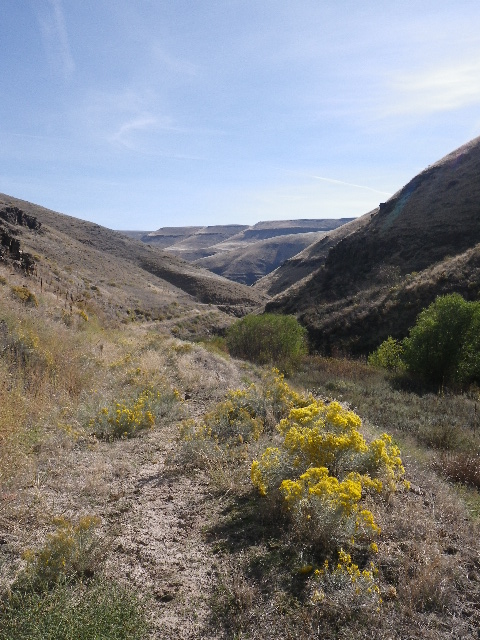
George Creek Trail in Asotin Saturday was a fun run where I took a chance by leaping off onto the George Creek Trail in Asotin County without a real clear idea of where I would end up - or how long it would take to cover the ground back to the house.

There are two trail heads on the WDFW Land website. I used the second one, the Rockpile Parking Area. Directions are easy enough  to follow:

Rockpile Parking Area:  From Asotin, drive west up Asotin Creek Road and take a left on Cloverland Grade Road.  Follow Cloverland Grade road up to the ridge top where the agricultural fields begin.  Go approximately 5 miles to WDFW parking area on left side of road.

Once there, it was a matter of sliding through the gate to the abandoned jeep trail (this was very steep with a lot of loose rubble and overgrown) to the canyon floor. On the way down, you're guaranteed to get soggy shoes from a natural spring set to flow into watering tanks for horses. The overflow runs right across the trail.

Once I hit the canyon floor, there are multiple trails, some headed further up the canyon and the one I wanted, headed back down.  The trail at this end is single track - it doesn't really widen for about 4 miles.

The trail follows Rockpile creek until it reaches George Creek. Rockpile was pretty much dry with a couple of soggy spots - I hope I can get out here in the spring when the creeks should all be full and the wildflowers in full bloom. As it was, there was typical desert sage and scrub grasses.

The first canyon intersection branched left toward home and right towards....I dunno. That will be an exploration when I have a little more base endurance. Saturday, I rolled left, scattering a herd of deer that were grazing on the lower meadows. Last I saw of them, they were cresting the steppe on the far side of the canyon.

The trail widens into a jeep track and then a dirt road as you get closer to the lower farms closer to town. It looks like there is a major effort by the Washington Department of Fish and Wildlife to create a sustainable watershed. From the tracks, it appears that they brought in heavy equipment to clear some brush and set logs to restrain debris flowing downstream under flood conditions. A bit further down, I found the backhoe clearing the creek bed to prepare a new bridge system.

The operator looked a little shocked to see me jogging down the trail - I get the impression that few people ever head out to George Creek despite its proximity to Asotin - but shut down the rig long enough for me to ford the creek- the third time I soaked my feet.

From there, it was an easy run to George Creek road, mostly gravel and a right turn onto Asotin Creek Road as I wound my way back to the house.

All in all, a nice intermediate run, maybe 12-13 miles long, and mostly in the solitude of the canyon.


The Self-confidence to Market a Book

A comment yesterday on a writer's blog by an author who felt she didn't have the self-confidence to market a book fascinated me because she's already written a book, an act that requires a ton of backbone. This seems to be a big hang-up for many writers, and one reason that many look at a traditional publisher for their work rather than self-publishing. The expectation is that the publisher will handle all the icky stuff while the writer focuses on the next novel or book. From what I have read this is an unrealistic view - most publishers appear to want the author to market their own work, absorb all the expenses and pay for the 'opportunity.'

The author mentioned that she fluctuates -  "One day I think the book is amazing, the next, it's all horse manure."

My family will recognize this. On a good day, I have a huge ego and everything is great, or at least, fixable. The other days I hide under the bed, convinced that it's all crap, every word. Writing anything for public consumption is a tremendous act of faith. First, that you have a story or an idea worth sharing. And, if you do, can you translate that idea into written words that will make the reader feel they story. Creativity and craft, the two touchstones of writing, held together by persistence until a book is birthed.

Finally, after you've poured yourself into that story, it's done, and ready to send out to the public - whether through a publisher or on your own. That's your work, your feeling, your joy. And you just exposed it to the masses.

Writing a book and offering it to a reader is a bit like stripping naked on Main Street and shouting "Look at me!" The very act takes guts which is why so many books sit, finished, in the author's upper left hand drawer, where no one will ever see it, no one will see what an amazing thing that you have created.

On the low ego days, the days when 'it's all horse manure," you remember that you're naked, and you have to trust yourself and your instincts and, most of all, your readers.

You don't need more self-confidence to market a book- you've probably got plenty. It only goes from amazing to manure in your head. What you need is more trust in your craft and your readers.


A Contest for FREE Copy of A Walk with Rose

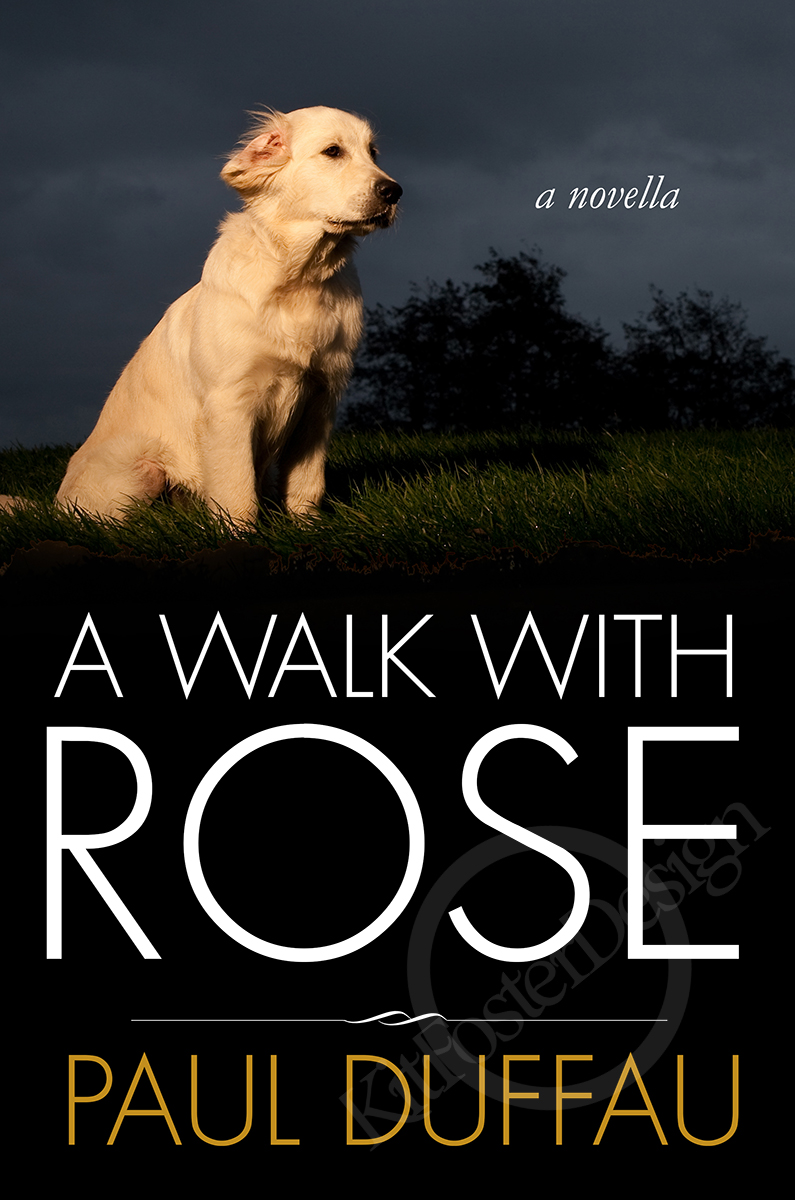
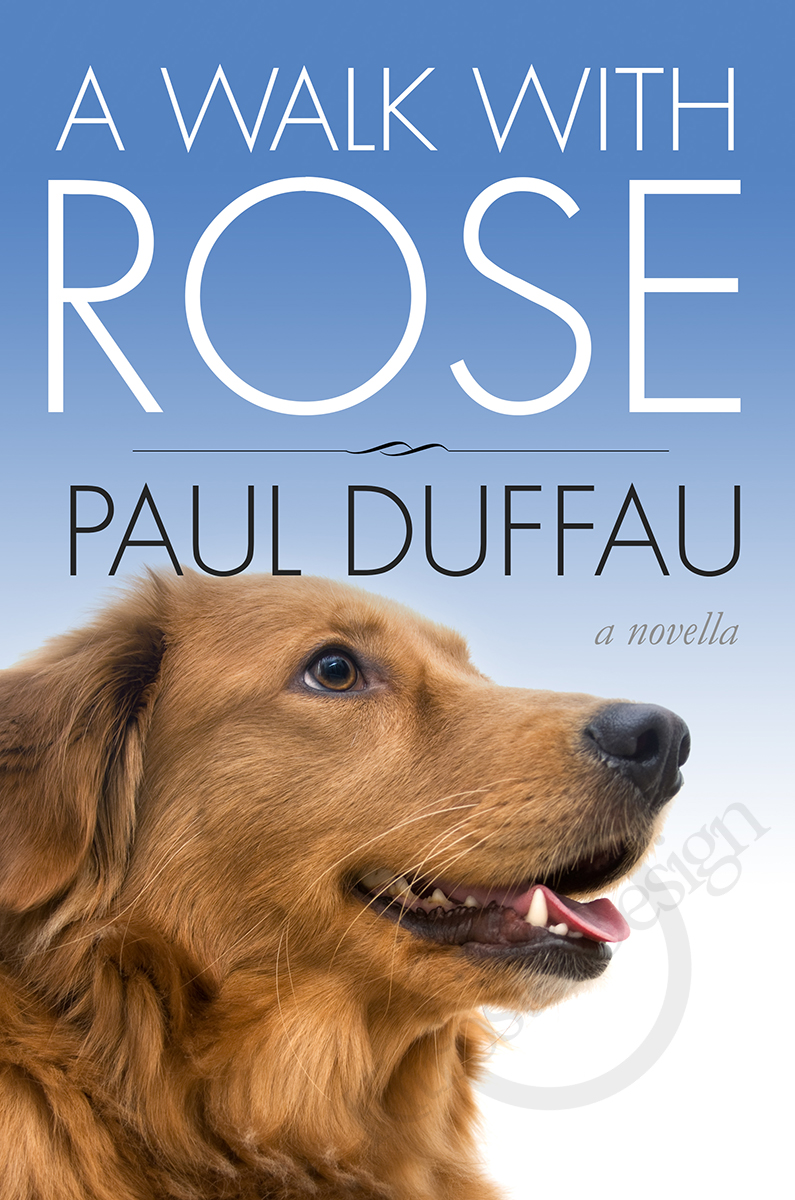
I am interested in getting opinions on some ideas that my terrific cover designer, Kit Foster of the UK, has come up with for A Walk with Rose. As a thank you, I will be giving away a free copy of the story to one person, selected at random, from anybody that comments or votes on the covers.

If you would like a chance to win a copy of A Walk with Rose, just let me know which cover think is the bestPick the one that you prefer and let me know in the comments or, if you would like to email me, use the contact info on that tab.

The contest will end on October 7th, 2013.

Many, many thanks!

Paul Duffau

A Walk with Rose 2 WMA Walk with Rose 3 WM


Ps. A Reminder that 25 percent of the profits will go to the Lewis Clark Animal Shelter.

PPS. If you would like to read the first Act of the story, you can here. Please remember that it is an unedited version. New and improved is on the way.

Keeping Promises

Keeping promises - especially to your kids - is a crucial part of life. So when my daughter asked me to join her in a half-marathon next summer (2014), I was leery of saying yes. This broken down body of mine limped through most days when I walked, much less when I tried running. I said yes anyway.

Rational? No, not really but, at a fundamental level, I needed an anchor. I've always succeeded when I was willing to accept the price of the dream, whether chasing after an ultra or starting a business. I've also had my moments of deciding that, nope, I wasn't willing to pay that price. Early in my working career, problems abounded because I act on my beliefs. That usually acts as an impediment in corporate America.

So, I said "F. it" and found employment where I worked as my own boss. When I got tired of even that little bit of control, I started a business. About the same time, my gout exploded from an occasional annual bout to monthly attacks and my running went from 70 miles a week to be glad that walking didn't hurt too much and squeezing what miles I could when I didn't hurt too bad.

My doctor through the last five years of this has been the essence of patience. She never let me off the hook for how hard I pushed but, together, we worked on it. Along the way, we discovered that I react to most NSAIDs which makes controlling the outbreaks a pain.

I'm also reactive - I don't want to say allergic because it's not a 'take a dose, have an anaphylactic fit' - to the gout medications and diet was getting me only so far. Prednisone would knock down the swelling but wipe me out from running for three weeks or more.

Then came last year's Spokane to Sandpoint relay and, the night before, a mild gout attack. The team used up their its pool of replacements covering for a young lady with the flu. I ran the relay with the bum foot and along the way, set a new performance standard when on of my teammates cheered me on with a shout of "You're not limping!" Good enough and it got me through the weekend.

I went to see her - again - after that. Diet wasn't working and the attacks were getting more frequent. In December, she offered to try me out with a new medication.

No problem.

I read the literature. It would trigger attacks for two months to two years while it cleaned out my system - if I didn't react to it first.

It was in January that my daughter asked me to run with her, in the midst of what would turn into a six month long attach of gout that moved from joint to joint and often occupied two or three joints at once.  I hadn't run since early December when I visited a friend in Eugene.

I said yes, anyway.

And then began worrying about keeping promises. I ran when I could - twice in a week sometimes, separated by two or three weeks by another attack. Running too much actually triggers more attacks.

And I had to suck up what pride I had left. Once I could run 100 miles. This summer, it was Snowshoe trail at Field Springs State  Parkdown to two miles and I had to stop. So, two miles at a time I ran and one day it was two and a half.

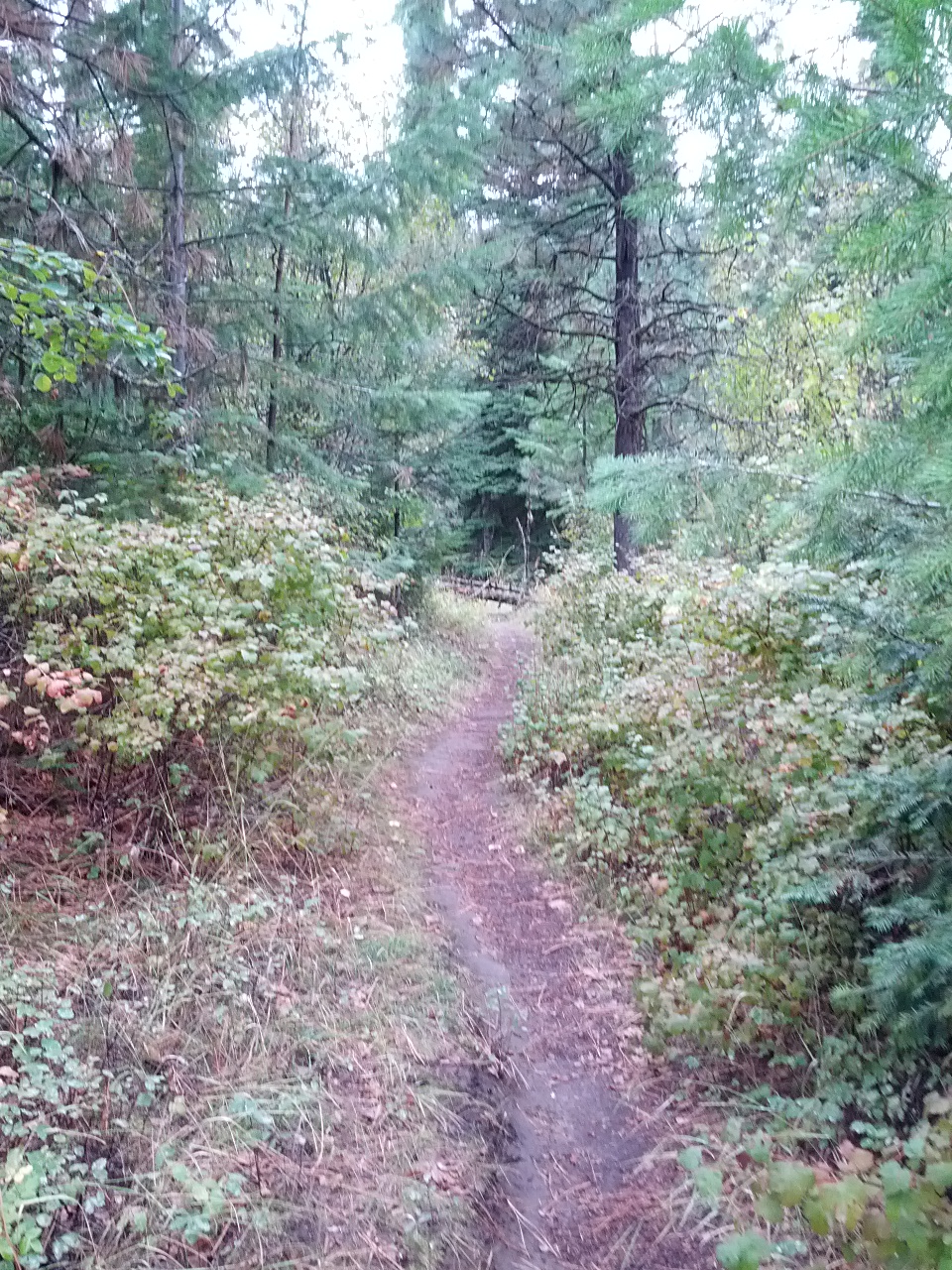
Today, it was about six. And for a short stretch of trail, the stride was strong, the ground flew by, and I chased a mule deer through the wood.  The deer won and it wasn't close but for that moment, a little sliver of hope that I kept banked and carefully tended, burst into flame.

Because I think that I'm going to be able to keep my promise to my daughter. And while keeping promises is important, rekindling hope can life-changing. For me, a small change, a return to what was.

But if you can kindle hope in someone who has no belief in the future, you've done them a great service. I look at all the children who have already given up whether it's due to family circumstances or crappy schools or the gangbangers on the corner and I want to find a way to inspire them.

And I don't know how. Not yet. But I will.

I promise. Somewhere, sometime, I'm going to make that connection.


Long runs for Junior High School

Defining long runs for junior high school athletes can drive a coach slightly batty. At one end of the spectrum, you have the kids that are natural runners and, in some cases, already ran on a regular basis before the cross country season started. The other end of that spectrum is occupied by the kids that are doing this for the first time and for whom a jog around the block may be the furthest they've ever run.

In Asotin, even with a very young team - we have no eighth grade girls and the boys team has only two- we have both, just as every school does. A difference for us is that some of our seventh graders were with us last year and bought into running - and baseball for the boys.

So we've adopted two strategies. The first was to take the strongest of the experienced runners and let them run with the high school team on the easy days for the high school. Even that is a bit much for them but an occasional dose - and exposure to the work ethic that our high school athletes have - is meaningful for them.

The other strategy we used yesterday is to let the kids segregate into groups - for the most part, we let them self-select - and each coach plus a volunteer, my daughter Sara, took a group out. Different paces, different distances, different goals.

For the speedy Gonzalez's, it was about 4.5 miles at 9 minute pace. Some of the kids bit off a touch more than they could chew and eased into the park at the end at a walk. One kid, feeling a twinge, wisely did the same after 3.5 miles.

I ran with the middle group. These were mostly kids that are new to running (one was an eighth grade boy that I wanted in the group for some leadership) and we discovered all sorts of things on a 3.25 mile jaunt at 'Coach Paul' pace. One girl noticed another constantly speeding up and then stopping to walk - understandable as she is a sprinter on the track team. Pacing is new to her but I was tickled that I wasn't the one that pointed it out to her but a teammate did. One of the sixth grade boys had never run this far so he got a PR on distance - it certainly won't be his last.

The final group, led by Sara, was on a mission: Run without walking. It doesn't seem like an ambitious goal for athletes but for kids that have no base of running, learning that they can do this is huge. The emphasis is not speed but perseverance. For most, it was a success.

Since we're dealing with young athletes, we don't do many long runs and, obviously, what is a long run to the kids now will someday be a short easy day. When we plan long runs for junior high athletes we take the long view and make sure that we give them just enough of a challenge to help them develop and not so much that we kill the run or injury the runner.

Because, in the long run, we want them to be runners for life.

No Dogs Allowed - Asotin District Policy

Stitch, our dog, apparently followed Kelly Brady, neighbor and teacher, to school yesterday here in Asotin. For those that don't know us, we live directly across from Asotin's school. I don't break it down by Asotin High School, Middle School, Elementary School because they're all housed in the same group of buildings. The entire district is smaller that some graduating classes at city schools. We like it that way.

Anyway, somebody (...er, sorry sweetie!) left a door to the front open, so Stitch went exploring. From what we can gather, he grazed on the grass in front before playing in traffic - thank goodness for a small town! - but got bored so he followed a friend right into class. Algebra I apparently. Mrs. Brady, according to reports from the youngest daughter, has never had this particular experience. Neither had the students and they were begging to be allowed to fire up their phones and take pictures.

The principal was not at all amused.

Sadly, they didn't even offer an assessment to see if he was ready for Algebra I.Stitch the gone got sent home from school, making him the first in the family (I think - my mother will correct the record if I am wrong.)

The Starter - A Guy with a (Fake) Gun

Cross country season is off to a great start - not in small part due to the volunteers that help staff the meets here such as Les - today's starter at the Seaport Invite in Clarkston, Washington. TheBantamI've watched Les start races in the Inland Northwest for about a decade and always wondered at his easy disposition and calming effect on a mob of athletes itching to sprint away. Today was nice because I had a chance to chat with him briefly after the junior varsity race got under way since I was the backup timer today and didn't have to call splits at the mile mark.

This marks the 28th year that Les has acted as a race official, working both cross country and track. Before that, he coached for a couple of decades - between the two, he has five decades of experience which is a stunning concept, at least for me (having just reached my fiftieth year - it means he started coaching the year I was born.) He plans on sticking around for at least a few more years so that number will only grow. Like Ripken's consecutive game streak in baseball or Coach K's wins in college basketball, it's a record that's going to be awfully hard to beat.

Interestingly enough, he grew up in Maryland, not far from where I grew up. Both of us were children of people in government service - his father was military, mine Department of Defense and we've both been to Okinawa. It's an odd feeling - a touch of nostalgia - to meet someone from that neck of the woods when I've left it far behind, both in distance and in time.

Les projects an old-fashioned graciousness and warmth and I suspect that aspect of his personality is what gets the races off to such smooth starts. Listening to parents compare him to other starters just reinforces the importance of the role that he plays - whether he knows it or not - to the community and to the athletes.

I also suspect that if you brought you his role, he'd tell you that it's all about the kids and the joy that they bring as they compete against each other and themselves. It certainly wouldn't be about Les and five decades of service to these youngsters. The Starter is that kind of man.